Hughes Living Capital · Houston, Texas
We buy property with money our businesses already make.
Hughes Living Capital is the real estate arm of the Hughes companies. Furniture retail, procurement, lockers and auctions generate the revenue. A fixed share of it goes into an acquisition reserve and comes back out as deeds — rehabs, rentals, rooms, short-term rentals, land, and small commercial.
Buy box
Rev. 2026These are criteria, not a track record. Hughes Living Capital is in its acquisition phase — this is the bar a deal has to clear before we write an offer.

01 — The thesis
Retail cash flow in.
Deeds out.
Most small investors start with a loan and hope the deal feeds itself. We start with businesses that already produce cash, and treat real estate as where that cash goes to stop being cash.
-
01
The operating businesses earn
Furniture retail, government procurement, parcel lockers and pallet auctions. Four revenue lines that do not rise and fall together.
-
02
A fixed share is swept to reserve
Each quarter a set percentage of net profit moves into an acquisition reserve instead of back into inventory. It is a rule, not a decision made deal by deal.
-
03
The reserve buys the asset
Cash for the small rehabs, down payment and reserves for the financed ones. Buying with our own money is what lets us close in ten days and negotiate like it.
-
04
The warehouse furnishes it
Staging for the flips, full packages for the short-term rentals, appliance and furniture bundles for tenants — at our cost, not retail.
-
05
Proceeds return to the reserve
Rent and resale profit cycle back in. The businesses seed the first deals; the portfolio is meant to fund the ones after that.
02 — What we buy
Nine ways in, ordered by what they cost you.
Ranked from least capital and least operating burden to most. We expect to work the top of this ladder first and earn the right to the bottom of it.
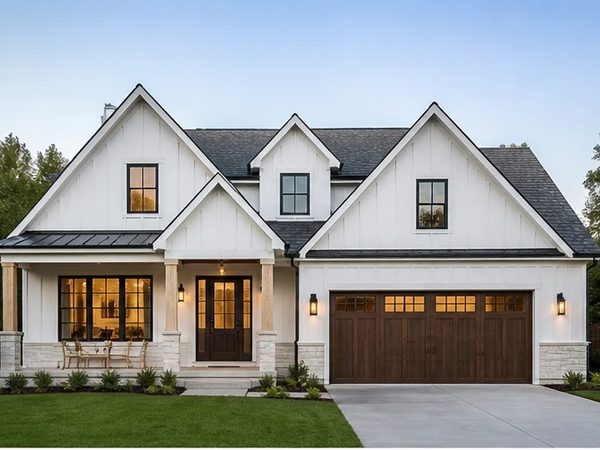
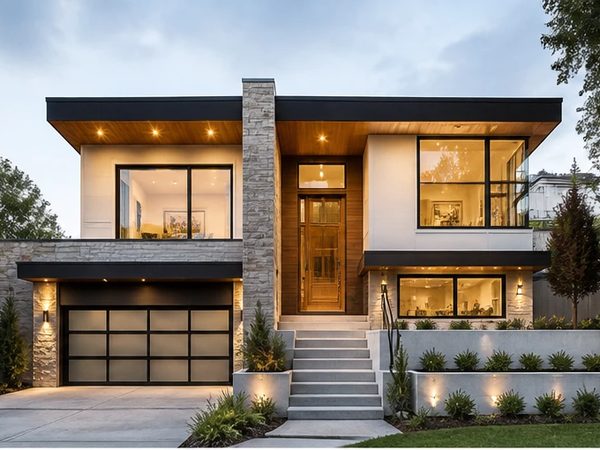
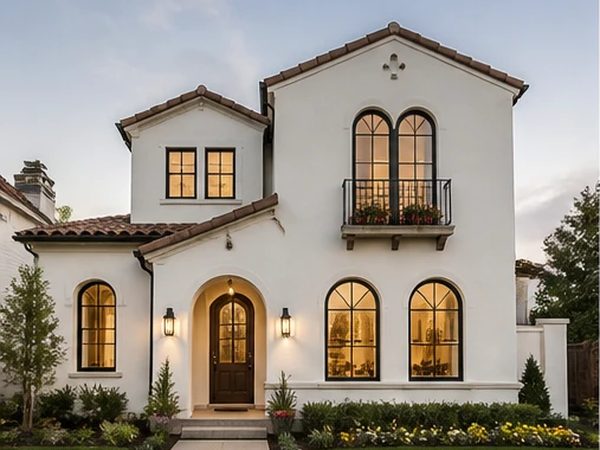
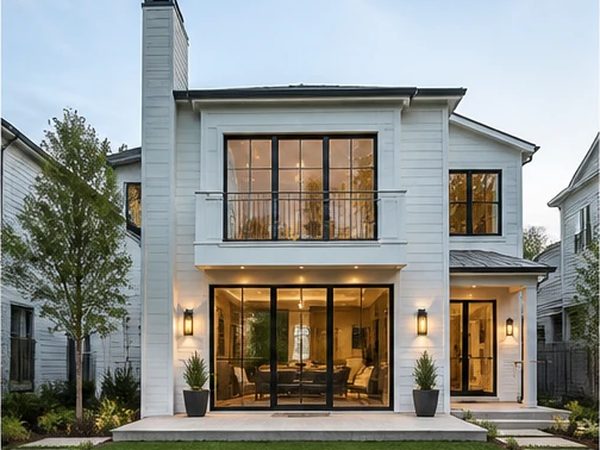
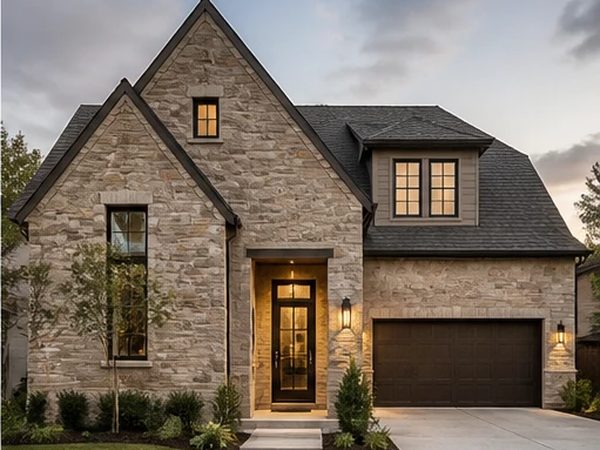
Illustrations, not listings. These are renderings of the house types the ladder below is written for — not properties Hughes Living Capital owns, has bought, or has under contract. We have no portfolio to show yet, and would rather say so than imply one.
01 House hackingLive in one unit, rent the rest, finance it like a homeowner.
Buy a two-to-four unit property, live in one unit, rent the others. Owner-occupancy unlocks financing an investor cannot get — low down payment, thirty-year fixed, the best rate on the board — and the tenants cover most or all of the note.
It is the cheapest possible entry into multifamily, and after a year the property converts to a straight rental while the next one repeats the trick.
The trade: you live at the job site. Your tenant problems are also your neighbor problems, and owner-occupancy rules mean you cannot simply move out on month two.
02 Single-family rentalsThe boring base of the portfolio. Pays the note when a flip runs long.
Houses bought to rent. Families stay three to five years, turnover costs are predictable, and single-family is the easiest asset to finance, insure, and eventually sell — the buyer pool includes everyone who just wants a house.
This is the base of the portfolio: slow, boring, and the thing that pays the note when a flip takes an extra ninety days.
The trade: one door, one income stream. A vacancy is not a dip in revenue, it is all of it — while taxes, insurance, and the mortgage keep their own schedule.
03 Rehab & resaleBuy distressed, renovate, sell — staged from our own shelves.
Buy distressed under market, renovate, sell. It is the fastest way to turn a reserve into a bigger reserve, and the only strategy here where the profit is created rather than collected.
Our version staged out of our own furniture inventory, which removes a line item most flippers rent by the month.
The trade: the entire profit lives inside the rehab estimate and the holding clock. Miss the scope by twenty percent or sit on the market an extra season and a good deal becomes a lesson.
04 Co-living, rent by the roomA four-bed house rented as six to eight furnished rooms on PadSplit. Utilities in, weekly pay.
Take an ordinary three-or-four bedroom house, convert the dining room and den into bedrooms, put a lock on every door, furnish every room, and rent the rooms one at a time to working people who need a place this week. In Houston a furnished room with utilities rents for roughly $125 to $230 a week on PadSplit, so a house that would gross $1,800 a month as one lease can gross two to three times that as six rooms.
PadSplit handles the listing, screening, weekly collection, and house rules for the first ten days of each member's rent plus 8% after. Our part is the part we are already good at: the conversion and the furniture. PadSplit tells hosts to budget about $1,000 a bedroom for furnishing. We fill rooms from our own warehouse and auction pallets for a fraction of that.
The trade: six tenants is six times the turnover, wear, and kitchen disputes. Utilities are on you and they are unbounded. Houston has no zoning but it has deed restrictions, occupancy limits, and neighbors — check all three before you close, not after.
05 Short-term & vacation rentalsGulf Coast beach and Houston medical-center stays, furnished at wholesale.
Nightly and weekly rentals in places people actually want to be — Gulf Coast beach property, Houston medical-center and event-driven stays. Done right, one unit can out-earn three long-term doors.
Furnishing a short-term rental is a real five-figure line item at retail. We buy furniture wholesale for a living, which is the single clearest place our two businesses touch.
The trade: this is hospitality, not landlording. Revenue is seasonal, cleaning and turnover are constant, reviews are the whole business, and a city ordinance can change the rules between one booking and the next.
06 Small multifamilyDuplex to twenty units. Vacancy becomes a percentage, not an event.
Duplexes, fourplexes, and small apartment buildings. Vacancy stops being an event and becomes a percentage — one empty unit out of twelve is a rounding error, not a crisis. One roof, one lot, one insurance policy across many doors drops the per-unit cost of everything.
Above four units the value is set by the income the building produces, not by what the neighbors sold for. That means we can raise the value by operating it better, which is the part we control.
The trade: past four units the financing turns commercial — shorter terms, balloon dates, bigger down payments, and a lender who underwrites the building's books instead of your paycheck.
07 Land & developmentInfill lots and acreage in the path of growth. Patient money only.
Infill lots and acreage in the path of growth. Value comes from changing what the dirt is allowed to be — splitting a parcel, running utilities, platting, entitling — and then either building or selling to someone who will.
It is the strategy with the widest spread between a good decision and a bad one, because nothing about the land tells you which you made until later.
The trade: raw land produces nothing while you own it. Taxes, interest, and clearing costs run every month against zero income, and entitlement timelines belong to a county office, not to you.
08 Strip centersNeighborhood retail with three-to-ten-year leases and tenants we already sell to.
Small neighborhood retail — the six-to-twelve bay centers with a laundromat, a taqueria, a nail salon, an insurance office. Leases run three to ten years and typically push taxes, insurance, and maintenance to the tenant, so the rent that arrives is closer to the rent you keep.
Our procurement side already sells to small commercial operators. Being their landlord is a shorter step than it looks.
The trade: tenants are businesses, and businesses close. One anchor leaving can erase a year of income, and re-leasing costs real money in build-out allowances and broker commissions before a dollar of new rent lands.
09 Event centersA venue we own and run. Highest revenue per square foot, and the most work.
A venue we own and run: weddings, receptions, corporate bookings, quinceañeras. Revenue per square foot beats every other asset on this list, and we already furnish rooms, source equipment, and run vending and concessions inside the group.
This is the end of the ladder on purpose. It earns the most because it asks the most.
The trade: this is a business with a building attached, not a passive asset. Staffing, bookings, liability, liquor rules, and weekend nights are the job — a bad quarter here costs more than a vacancy anywhere else.
03 — The advantage
The part nobody else at this size has: a furniture warehouse.
Every investor competing for the same house has the same three tools — money, contractors, and a lender. Ours come with a supply chain already attached.
Hughes Living Co.
Staging is free to us
Flippers rent staging furniture by the month. We move ours off a shelf we already own, stage the house, and put it back when it sells.
Hughes Living Co.
Rooms and rentals furnished at cost
PadSplit budgets $1,000 a room. An Airbnb is a five-figure retail purchase. We buy furniture wholesale as our actual business, so those numbers are smaller for us than for the person bidding against us — and we sell the same packages to other hosts.
Hughes Living Auctions
Pallet inventory for rentals
Our auction arm buys furniture and household goods by the pallet and repairs them on the bench. Tenant-grade pieces that do not need to be showroom-new have a source.
Hughes Strategic Group
Procurement, pointed at rehabs
Sourcing and vendor pricing is the day job on the procurement side. Appliances, fixtures, and materials for a rehab are the same problem in a different building.
HSG Lockers
An amenity we already own
Parcel lockers are a leasing feature small multifamily rarely offers. Ours install at cost, and the vendor is us.
Structure
No investor clock
We deploy our own operating profit. There is no fund timeline forcing a sale at the wrong month, and no promised return that has to be paid out of a bad quarter.


04 — Criteria
What a deal has to hit.
Wholesalers, agents, and owners: this is the whole filter. If it clears these numbers, send it and you will get an answer the same week.
| Strategy | Price band | Condition | Return floor | How we close |
|---|---|---|---|---|
| Rehab & resale | $60K – $350K | Any, including full gut | $35K net spread | Cash or hard money, 10–14 days |
| Single-family rental | $90K – $300K | Cosmetic to moderate | 10% cash-on-cash | Conventional or cash, 21 days |
| Co-living (PadSplit) | $120K – $300K | 3+ bed, 1,500+ sq ft, convertible to 6+ rooms | 14% cash-on-cash | Cash or conventional, 21 days |
| Small multifamily | $250K – $750K | Stabilized or value-add | 7% cap · 1.25 DSCR | Commercial financing, 30–45 days |
| Short-term rental | $150K – $450K | Rent-ready or light rehab | 15% cash-on-cash | Cash or conventional, 21 days |
| Land | $25K – $250K | Raw, infill, or platted | 2× basis at exit | Cash, 10 days |
| Strip center | $400K – $750K | 60%+ occupied | 8% cap · 1.30 DSCR | Commercial financing, 45–60 days |
Where: Harris, Fort Bend, Montgomery, Brazoria and Galveston counties; Gulf Coast short-term rentals from Galveston to Surfside. Event centers are underwritten case by case — send them anyway.
05 — Discipline
Every deal goes through the same sheet.
Flip, rental, short-term, or commercial — the numbers get run before the emotion does. The same underwriting sheet we use is on this site, open, with nothing hidden behind an email form.

Who you are dealing with
One operator. No committee.
Jay Hughes runs the Hughes companies from Houston — the furniture business, the procurement firm, the lockers, the auctions — and makes every acquisition decision here personally. You send a deal, you get an answer from the person who can write the check.
06 — Contact
Send the address and the number.
No packet required. Address, asking price, condition, and whether anyone is living in it is enough to get a yes or a no.